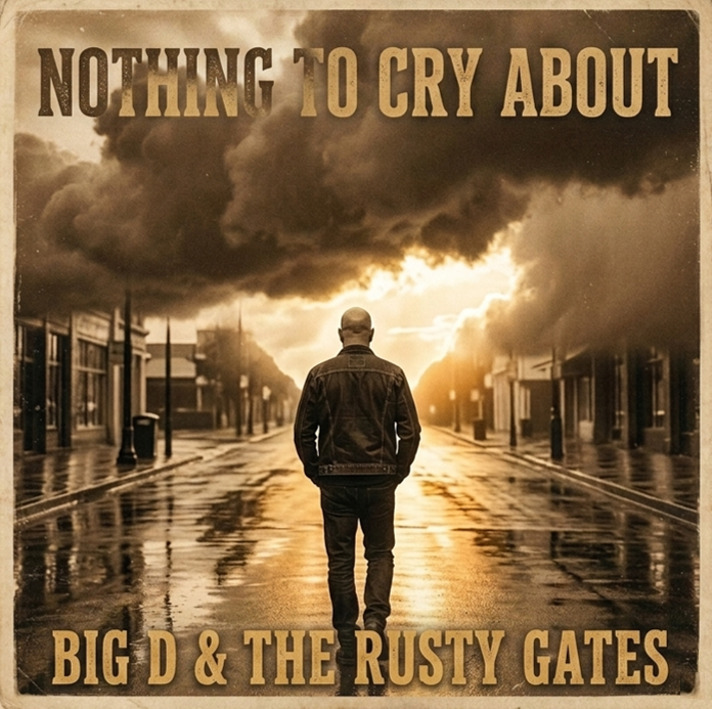
Nothing to Cry About
The first record. Eight songs that established who Big D & The Rusty Gates are — world-weary but not defeated, honest without being bleak, rooted in blues tradition without being trapped by it.
The first record. Eight songs that established who Big D & The Rusty Gates are — world-weary but not defeated, honest without being bleak, rooted in blues tradition without being trapped by it.
Every first album carries the weight of everything that came before it. The songs that were written over years, the feelings that accumulated without an outlet, the things that needed saying before anything else could be said. Nothing to Cry About is that album — not a debut in the sense of a beginning, but a debut in the sense of a first statement from someone who had been thinking for a long time about what they wanted to say.
The title is both defiant and tender. There is plenty to cry about. The album knows this. But the blues has always understood that naming a thing is different from being defeated by it. You sing about the pain because singing about it is how you survive it.
Eight songs. Eight different angles on the same territory — love, time, loss, the specific weight of ordinary life. The band plays like they have been playing together for years, which in some sense they have.
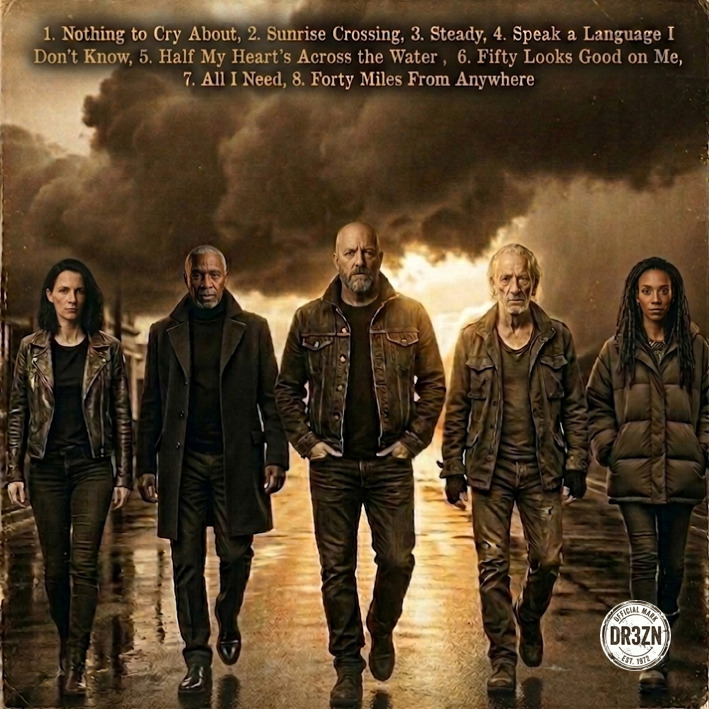
Track Listing
The title track. Big D at his most direct — acknowledging everything that is wrong while refusing to be undone by it. The blues as survival strategy.
An early morning song. The particular quality of light and thought at the beginning of a day you are not sure about. Also appears on Live & Unspoken Vol. 1.
About holding your ground when the ground is uncertain. Also appears on Plain & True — An Acoustic Session, where the two-guitar arrangement strips it back to its essential shape.
A parent watching two of the kids share a private language of their own — fights that blow over in minutes, a closeness nobody else is invited into. Not distance. The opposite of it.
About belonging to more than one place. The feeling of being divided by geography — not tragically, just factually. Half here, half somewhere else, fully neither.
Dry and warm. Big D making peace with age — not reluctantly, but with the particular satisfaction of someone who has earned their years. Also on Live & Unspoken Vol. 1.
A love song of the quietest kind. Not about grand gestures — about the specific, ordinary presence of someone whose being there is enough. Also appears on Plain & True.
The closing track. The feeling of being far from where you are expected to be — and finding that this is not as bad as it sounded. An album that begins with survival ends with something that resembles freedom.